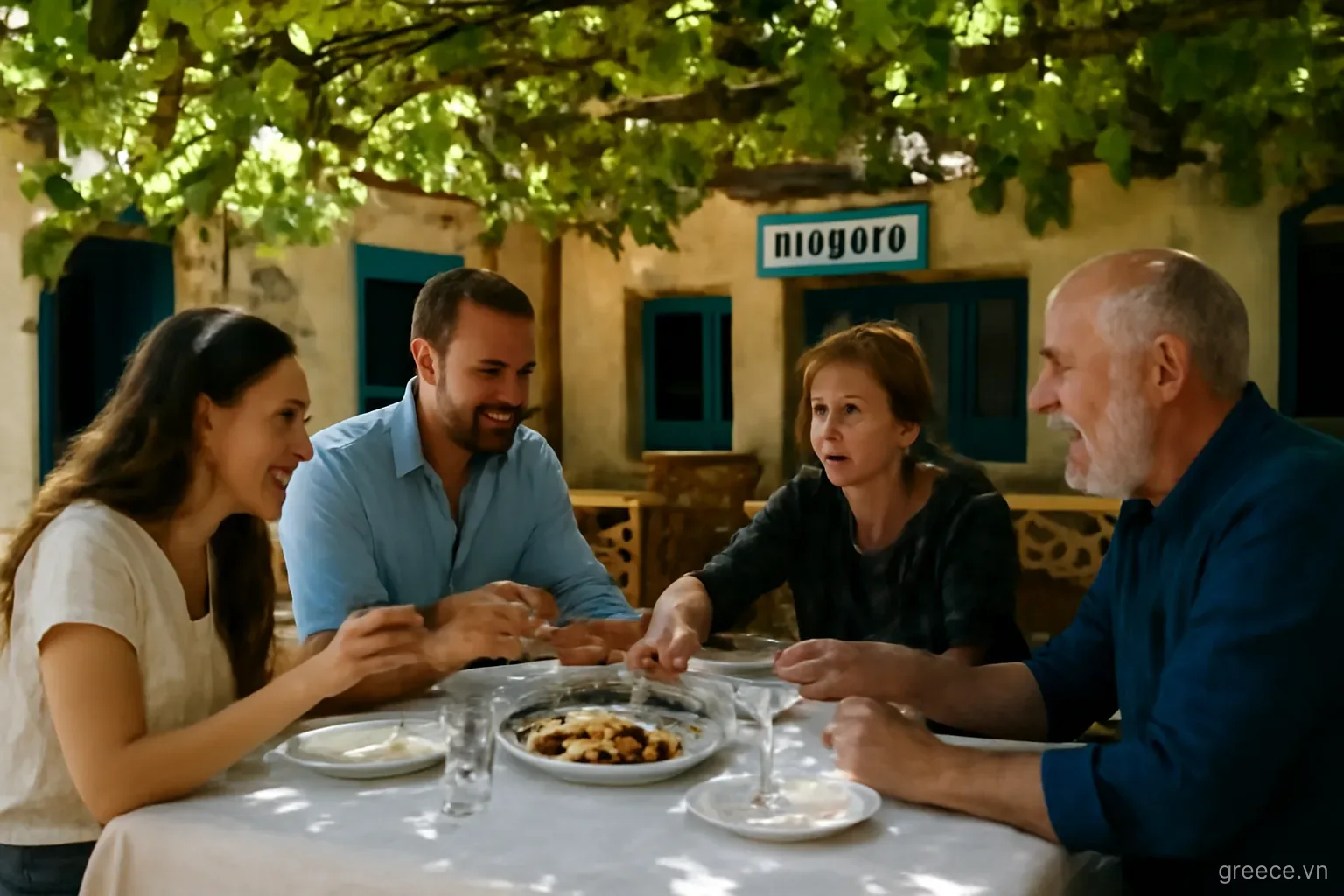
Language is the key to integration; here is how hard the local tongue is.
- Farm exports include olive oil, fruit, wine and seafood.
- Renewable energy and technology are emerging growth areas.
- After the 2010s debt crisis, the economy has recovered and returned to growth.
The official language is Greek, while English is widely spoken in tourism and larger cities.
Greece counts more than 6,000 islands and islets, of which roughly 200 are inhabited.
The official language
The capital, Athens, is the political and economic hub and the birthplace of Western democracy.
Greece has a population of about 10.4 million, most following Greek Orthodox Christianity.
It has a Mediterranean climate with hot, dry summers and mild, sunny winters.
Difficulty for learners
Public-university tuition for non-EU students is far lower than in Western Europe or the US.
Student living costs in Greece are among the more affordable in the EU.
International students may work part-time within the hours set by their study visa.
How common is English
A European Union member since 1981 and part of the eurozone, Greece uses the euro (EUR).
- Greece belongs to the Schengen Area, allowing free movement across much of Europe.
- Its coastline stretches about 13,600 km, among the longest in the world.
- Greece lies in Southeastern Europe at the southern tip of the Balkan Peninsula on the Mediterranean.
- As an EU and eurozone member, Greece accesses the European single market.
- Labour costs are more competitive than in Western Europe, appealing to some investors.
How to learn effectively
Scholarships come from the Greek state, the EU's Erasmus+ and individual universities.
Strong fields include maritime studies, archaeology, tourism-hospitality and medicine.
Greece's education system spans schooling, low-fee public universities and many international programmes.
Language at work
Greece's economy leans on tourism, shipping and agriculture.
Greece owns one of the world's largest merchant fleets by tonnage.
Tourism contributes a sizeable share of GDP, welcoming tens of millions of visitors yearly.
Need a tailored roadmap?
Viking Global Group walks with you from paperwork to settlement. Call +849.219.219.88 or email [email protected] for a free consultation.
Related articles
Frequently asked questions
Is Greek a difficult language to learn?
Greek has its own alphabet, noun cases, complex verb conjugations and important stress marks, which can challenge learners. However, spelling is fairly consistent with pronunciation, and many learners reach conversational level with steady practice and good teaching.
How should beginners start learning Greek?
Start with the alphabet and pronunciation, then everyday phrases, numbers and vocabulary for shopping and transport. Apps, textbooks for foreigners and listening to Greek music and podcasts help. A teacher is useful for correcting pronunciation and grammar early.
How much Greek do residents need?
English works in tourist areas and many workplaces in cities, but public services, healthcare, public schools and most jobs require Greek. Long-term residence and citizenship applications also require proof of Greek language skills, making learning a key investment.
Are there official Greek language certificates?
Yes. Certificates of attainment in Greek are offered at levels aligned with the Common European Framework of Reference by recognised bodies. They are used for study, employment and some residence and citizenship procedures. Check exam dates and required levels in advance.
Where can newcomers study Greek in Greece?
Options include university language centres, private schools, free or low-cost classes for migrants run by municipalities and NGOs, and private tutors. Everyday practice with neighbours and shopkeepers is one of the most effective ways to improve.
Information is for reference and may change under the latest official policy. Please contact us for current regulations.